
RET INTELLIGENCE · FUTURE BUYER DEMAND
The Exit Is Part of the Entry.
A property’s future buyer matters before you become the current one.

Who wants it after you?
A property can be exceptional to the person buying it today and still present a demanding resale question later. RET’s Exit Test brings that future buyer into the decision before a contract is signed.
The framework asks what a future buyer would be choosing, what alternatives that buyer might have, and which reasons for wanting the property could endure after the current finishes or launch excitement have aged.
The future buyer pool
At higher price points, affordability itself restricts the audience. Size, location, ownership costs and a specialized use can narrow it further. A large residence designed for one particular lifestyle may suit fewer people than its presentation initially suggests.
Begin with a plausible buyer profile: a primary-home purchaser, a part-time resident, a family needing substantial space, or someone whose use depends on marina access. Then examine relevant closed sales, marketing histories, current alternatives and the evidence available within that price band.
The number of plausible buyers is a question to investigate, not a statistic to invent. RET does not equate website interest, asking inventory or a handful of sales with a measured buyer count. Where the comparison set is thin, confidence should remain limited.
What can shrink the exit
What it costs to keep the home
Association charges, insurance, taxes and service obligations become part of the proposition another buyer must accept. Review current documents, assessment exposure and optional charges. Expensive services may be valuable to the right owner; the exit question is whether the next owner will value them enough to accept the full cost.

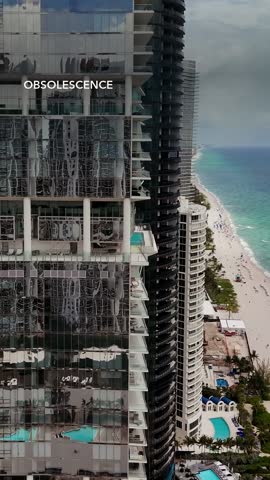
Obsolescence and competing supply
A property competes with the choices available when it is offered again. Ask which aspects of its appeal depend on being the newest product, and which would remain useful beside a newer alternative. Distinguish announced, approved, under-construction and delivered projects rather than treating every proposal as certain future supply.
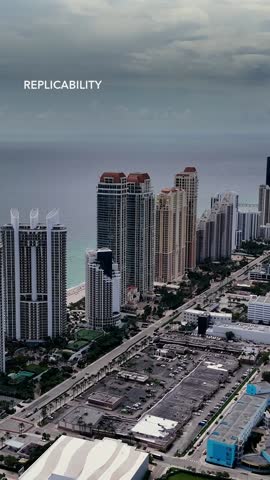
Could another home offer the same thing?
A premium feature deserves a replacement test: could another developer provide a close substitute? Similar finishes, amenity packages or architectural expressions may give a future buyer more choice. This is a comparison to investigate, not a conclusion that every glass tower is interchangeable.
Over-specialization
Uniqueness and broad desirability are different things. An unusual plan or highly personal design can be a genuine benefit for one owner while reducing the number of buyers it suits. Describe the practical use before deciding whether an unusual feature is an advantage at resale.
What can protect the exit
Finite waterfront, an unusually constrained site, usable marina frontage, low-density positioning, meaningful architecture and privacy can warrant closer investigation. Geography can explain why a property has fewer direct substitutes.
Verify the characteristic being purchased. A visible view is not automatically a legally protected view. Nearby slips do not establish a deeded berth, an available marina lease or suitable boating access. A low-density setting today does not establish future development limits.
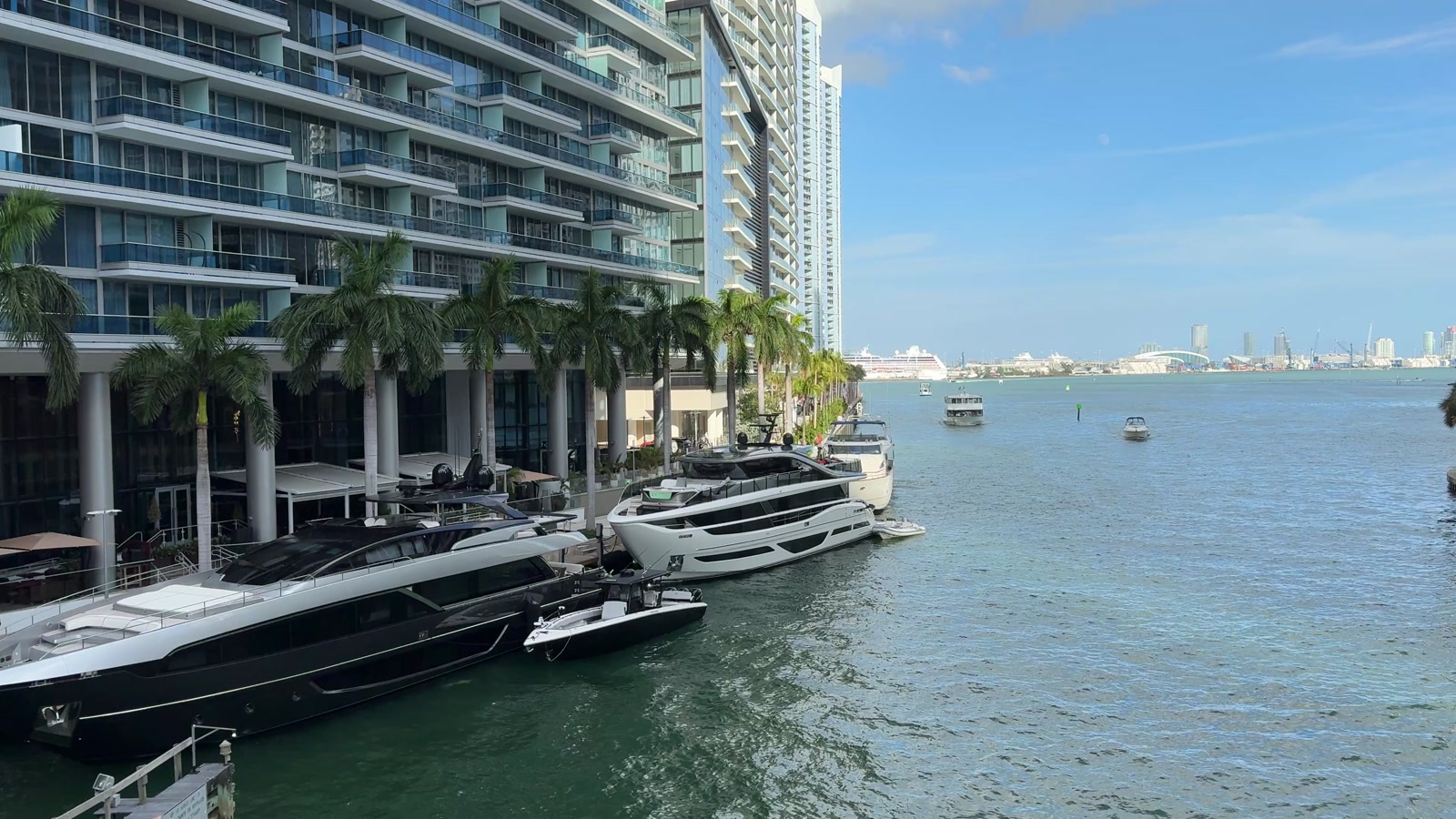
A hard-to-replace feature matters when it gives a future buyer a practical reason to choose the home. Being rare does not, by itself, make the asking price sensible or promise an easy resale.
Case study: when the site itself is the scarcity
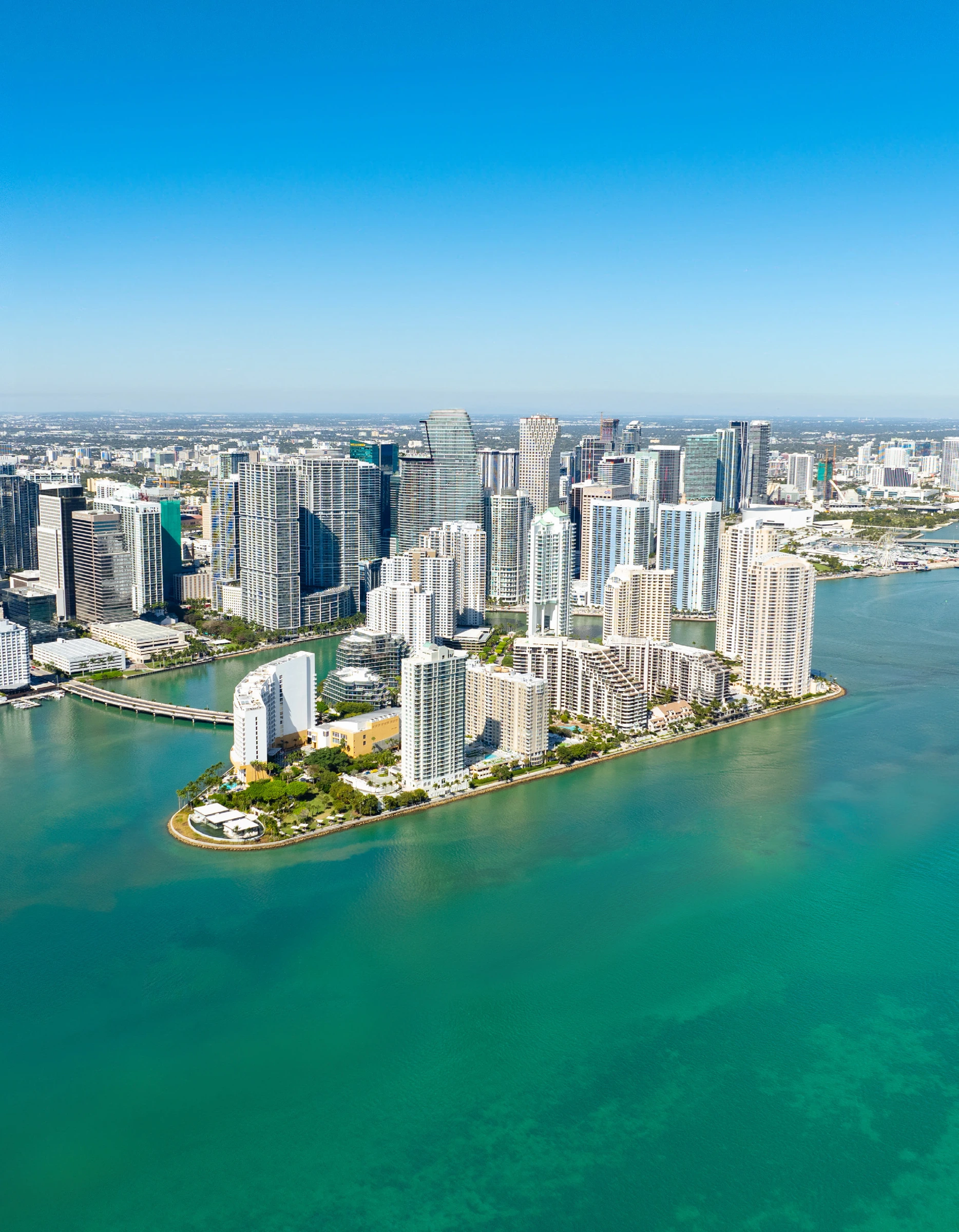
The Residences at Mandarin Oriental, Miami are planned for the southern tip of Brickell Key, with water on three sides. The developer-supplied render below shows the relationship between the constrained site and Biscayne Bay.
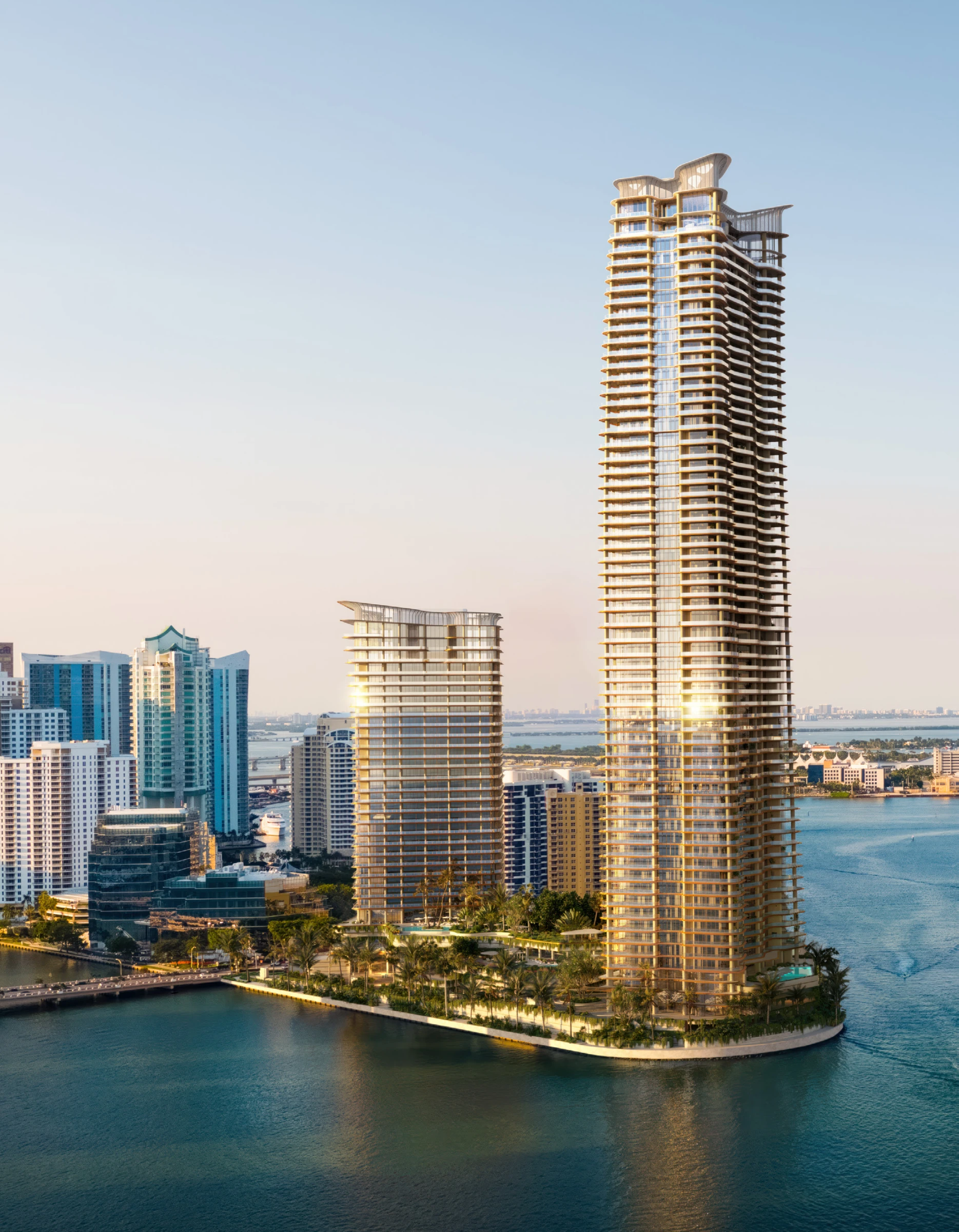
Some characteristics can be improved. Some can be copied. Geography cannot.
Regardless of whether a buyer chooses this project, the site illustrates RET’s distinction between the building and its setting. Another building can introduce new finishes or services; it cannot occupy this same parcel.
That observation is not a claim that Mandarin Oriental will outperform, that its views are permanently protected, or that a future buyer will pay today’s premium. Price, execution, contractual arrangements, ownership obligations and competing alternatives still need scrutiny.
QUESTIONS TO ASK BEFORE BUYING
The RET Exit Test
- Who is the likely next buyer?
- How large is that buyer pool?
- What makes this property difficult to replace?
- What future supply could compete with it?
- What recurring costs could narrow demand?
- Which features remain valuable even when finishes age?
Record the evidence, observation dates and unresolved questions behind each answer. This is an editorial framework, not a quiz, automated score, valuation or prediction of the time required to sell.
Bring the framework into an actual property decision
Use each project’s documented location, residence format and ownership proposition as the starting point. These projects serve different buyers and are not presented as interchangeable substitutes.
Sources, imagery and scope
Mandarin Oriental project location and supplied imagery: Adrian Gonzalez, developer broker package dated October 20, 2026; Neighborhood Guide pages 2 and 4. The full developer Neighborhood Guide, including its disclaimers, is supplied for source context.
RET is an independent real estate brokerage and is not affiliated with Mandarin Oriental Hotel Group or Swire Properties. The images illustrate the framework; they do not establish a unit’s availability, current construction status, marina entitlement, protected view or future financial performance.
Illustrative footage excerpts: The Nomad With The Drone, Miami DJI Mini 4 Pro Cinematic 4K (60FPS), CC BY 3.0; cropped and excerpted. No endorsement implied. Additional video footage: CAPTKHO kho via Pexels (https://www.pexels.com/license/). Video music: ‘A Kind Of Hope’ by Scott Buckley, released under CC BY 4.0 (https://creativecommons.org/licenses/by/4.0/), www.scottbuckley.com.au; https://www.scottbuckley.com.au/library/a-kind-of-hope/. Music excerpted, faded, level-adjusted and ducked. RET analysis is a due-diligence framework, not an appraisal or a guarantee of future demand.
Marina video revision: Ege TUTUNCU, Luxury Yachts Docked at Miami Marina, Pexels 36032436; Foster, Drone en Miami, Pexels 18293620. Pexels License: https://www.pexels.com/license/. Excerpted, cropped, frame-rate converted and lightly graded. No endorsement implied.